This adorable Godzilla sweater with its detachable tail and hood is one Halloween costume we have gotten plenty of use out of.
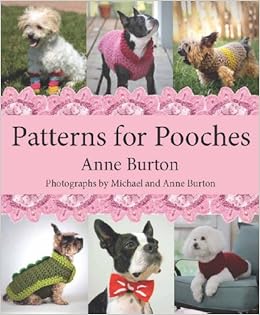
Tubby has worn it, Weasley has worn it, and when halloween is over we remove the tail and the hat portion and use it as a regular sweater. Its one of the best dog clothing purchases I ever made, and I have bought a LOT of doggie clothing, and honestly the pugs really don't seem to mind wearing it all, its so soft and comfortable they actually like it (well maybe not the hood part). Sadly the Etsy shop that made this adorable item, Bean Town Hand Made, is now defunct. The good news is that the shops designer, Ann Burton, has a new book Patterns for Pooches
with the patterns for all of her adorable creations. It retails on Amazon for $13.66. Sadly its a crochet book, and I don't crochet (though I can knit a bit). While I am dreaming of some day learning to crochet, mostly so I can make some of these patterns, I am definitely a bit too swamped now. I know a lot of my fellow bloggers are crocheters though and I'm sure you would be happy with the patterns in this book and your pooches would be all the cuter for it.
Showing posts with label Book Review. Show all posts
Monday, October 21, 2013
Thursday, May 9, 2013
Thoughtful Thursday-Book Review Pukka's Promise
After my last book review The Still Point in a Turning World which was a beautifully written book on a very upsetting subject matter I needed a lighter escapist book. So I took a break from dog books and read one of my all time favorite children storiesThe Ordinary Prince by MM Kaye, if you haven't read it do so now. So that is my excuse to getting late to review Pukka's Promise by Ted Kerasote after probably every other dog blogger has already read it.
While I am glad I read the book I do have some mixed feelings about it. Perhaps it is the after effect of reading The Still Point in The Turning World which is about our fear of death and our tendency to run from it rather then living in the moment, but I wonder if pet owners like myself are too obsessed with extending our dogs lives and if this causes us to loose focus on enjoying our time with them.
Kerasote gives advice on nutrition and vaccination that will be familiar to pet owners who stay informed about such things. I didn't find much new in these sections and I agree with Kerasote's belief that a raw diet is best (though I feed a high quality kibble). Some of his suggestions are a bit of base for most pet owners, he is able to feed Pukka elk he hunts himself, but over all any pet owner can make some of the changes he suggests, such as using filtered water and feeding high quality meat protein sources. I also enjoyed the section on finding non-toxic toys and cleaners, I've vowed to switch to vinegar and Seventh Generation products for cleaning once I exhaust my current supply of cleaners.
The most controversial part of the book is probably Kerasote's stance on spaying and neutering, he is against it. I am actually somewhat in sympathy with his views and I do wish more vets new how to do vasectomies. I personally like to wait a year to alter my male dogs and if I got a large breed I might wait longer or forgo neutering all together due to the link to cancer. However, I am not sure this decision is as easy as Kerasote makes it out to be, particularly for urban and suburban owners who want to take their dogs to dog parks and doggie day cares. Also Kerasote's decision to let Pukka wander when not altered troubles me, he says he knows all the dogs in his area but what if someone with an unaltered female was visiting? I don't doubt that Pukka is healthy enough to be bred and indeed may be a very worthy dog for breeding, but that should involve the search for the right female dog and not be the product of chance.
Unsurprisingly Kerasote has some harsh words for the state of modern dog breeds, though he does go to a breeder for his dog and is not at all opposed to responsible breeding. Kerasote has a definite idea of the sort of dog he wants, a rangy athletic lab that calls to mind his earlier dog, Merle. I don't fault him for this since I think its best people know what sort of dog suits them and are clear about what kind of canine companion fits into their life. However, Kerasote seems to be focused on the sort of dog he wants as being the best for everyone. He is pretty critical of my favorite breeds, pugs and bulldogs, and feels that all dogs should be athletes. However, just as Kerasote wants a dog to suite his outdoorsy life style in the wilds of Wyoming, I want a dog that suits my more sedentary urban existence, and pugs and bulldogs are perfect for that. I don't really see how my decision to get a dog that matches my needs differs from his. While I agree that health should be a breeders primary objective, I think that brachycephalic breeds often bare an unfair brunt of the criticism, after all many athletic breeds suffer from high rates of cancer and other challenges, which to his credit Kerasote does discuss. I was troubled that Kerasote implies that breeders of toy brachycephalic breeds, like pugs, don't care about their health. Many pug breeders donated substantial funds to the clubs efforts to find a genetic marker for PDE. Thanks to their efforts their is now a test and I was able to get Weasley from a breeder who screens her breeding stock for this dreadful disease, if she didn't care about her dogs health I doubt she would spend the money on the tests.
However, my primary problem with Kerasote is on the subject of training. He emphasis freedom and is opposed to leashes and such. I am sure that his dogs live an ideal existence and I agree that its important to give our dogs opportunities to think for themselves, but like lots of people with strong views on a subject Kerasote is something of a zealot. He feels many owners infantalize their dogs. Even though he himself is frequently highly anthropomorphic in how he talk about his dogs, and at one low point gets angry at his neighbors dog for getting in a tussle with his puppy over a bone, an occurrence that could easily have been prevented.
The one incident in the book that really bothered me occurs when he describes an encounter with a St. Bernard on a walk. Kerasote, Pukka, and a another dog and its owner are walking off leash in a park when a young woman approaches with her St. Bernard who is straining at the leash. Based on the fact that the women looks nervous Kerasote assumes that she is transmitting her anxiety to the dog. He asks the woman to let her dog off leash to play saying he will "be fine" and when the women says she can not because he has gotten into fights with other dogs he assumes that she is mistaken and does not know her own dog. He goes so far as to say that her dog will be denied an enjoyable life. As someone who owns a dog, Bob, who can aggressive with unfamiliar dogs off leash and knows many highly dog aggressive dogs I was very angered by Kerasote's dismissive attitude towards this dog owner and his belief that he can analyze the situation from a glance. Perhaps he is a right and the dog would have been fine off leash, or perhaps Pukka could have been seriously injured and the St. Bernard's owner is being a responsible and protective owner. For someone who wants to be free to make his own decisions about his dog, Kerasote at times seems highly judgmental of the decisions made by others.
| Kerasote and Pukka |
Kerasote gives advice on nutrition and vaccination that will be familiar to pet owners who stay informed about such things. I didn't find much new in these sections and I agree with Kerasote's belief that a raw diet is best (though I feed a high quality kibble). Some of his suggestions are a bit of base for most pet owners, he is able to feed Pukka elk he hunts himself, but over all any pet owner can make some of the changes he suggests, such as using filtered water and feeding high quality meat protein sources. I also enjoyed the section on finding non-toxic toys and cleaners, I've vowed to switch to vinegar and Seventh Generation products for cleaning once I exhaust my current supply of cleaners.
The most controversial part of the book is probably Kerasote's stance on spaying and neutering, he is against it. I am actually somewhat in sympathy with his views and I do wish more vets new how to do vasectomies. I personally like to wait a year to alter my male dogs and if I got a large breed I might wait longer or forgo neutering all together due to the link to cancer. However, I am not sure this decision is as easy as Kerasote makes it out to be, particularly for urban and suburban owners who want to take their dogs to dog parks and doggie day cares. Also Kerasote's decision to let Pukka wander when not altered troubles me, he says he knows all the dogs in his area but what if someone with an unaltered female was visiting? I don't doubt that Pukka is healthy enough to be bred and indeed may be a very worthy dog for breeding, but that should involve the search for the right female dog and not be the product of chance.
Unsurprisingly Kerasote has some harsh words for the state of modern dog breeds, though he does go to a breeder for his dog and is not at all opposed to responsible breeding. Kerasote has a definite idea of the sort of dog he wants, a rangy athletic lab that calls to mind his earlier dog, Merle. I don't fault him for this since I think its best people know what sort of dog suits them and are clear about what kind of canine companion fits into their life. However, Kerasote seems to be focused on the sort of dog he wants as being the best for everyone. He is pretty critical of my favorite breeds, pugs and bulldogs, and feels that all dogs should be athletes. However, just as Kerasote wants a dog to suite his outdoorsy life style in the wilds of Wyoming, I want a dog that suits my more sedentary urban existence, and pugs and bulldogs are perfect for that. I don't really see how my decision to get a dog that matches my needs differs from his. While I agree that health should be a breeders primary objective, I think that brachycephalic breeds often bare an unfair brunt of the criticism, after all many athletic breeds suffer from high rates of cancer and other challenges, which to his credit Kerasote does discuss. I was troubled that Kerasote implies that breeders of toy brachycephalic breeds, like pugs, don't care about their health. Many pug breeders donated substantial funds to the clubs efforts to find a genetic marker for PDE. Thanks to their efforts their is now a test and I was able to get Weasley from a breeder who screens her breeding stock for this dreadful disease, if she didn't care about her dogs health I doubt she would spend the money on the tests.
However, my primary problem with Kerasote is on the subject of training. He emphasis freedom and is opposed to leashes and such. I am sure that his dogs live an ideal existence and I agree that its important to give our dogs opportunities to think for themselves, but like lots of people with strong views on a subject Kerasote is something of a zealot. He feels many owners infantalize their dogs. Even though he himself is frequently highly anthropomorphic in how he talk about his dogs, and at one low point gets angry at his neighbors dog for getting in a tussle with his puppy over a bone, an occurrence that could easily have been prevented.
The one incident in the book that really bothered me occurs when he describes an encounter with a St. Bernard on a walk. Kerasote, Pukka, and a another dog and its owner are walking off leash in a park when a young woman approaches with her St. Bernard who is straining at the leash. Based on the fact that the women looks nervous Kerasote assumes that she is transmitting her anxiety to the dog. He asks the woman to let her dog off leash to play saying he will "be fine" and when the women says she can not because he has gotten into fights with other dogs he assumes that she is mistaken and does not know her own dog. He goes so far as to say that her dog will be denied an enjoyable life. As someone who owns a dog, Bob, who can aggressive with unfamiliar dogs off leash and knows many highly dog aggressive dogs I was very angered by Kerasote's dismissive attitude towards this dog owner and his belief that he can analyze the situation from a glance. Perhaps he is a right and the dog would have been fine off leash, or perhaps Pukka could have been seriously injured and the St. Bernard's owner is being a responsible and protective owner. For someone who wants to be free to make his own decisions about his dog, Kerasote at times seems highly judgmental of the decisions made by others.
| How I wish they would live forever |
Wednesday, January 2, 2013
Happy Birthday JRR Tolkien
While reading about the life of one of my favorite authors, fantasy genius, JRR Tolkien

I was distressed to discover he in fact never owned a dog ( I pictured him with an Irish Wolfhound).
There are rather Irish Wolf Hound esque sort of dogs that appear briefly in The Hobbit, the shape shifter Beorn,
has some large dogs that are sorts of servants and can walk on their
hind legs. In the Lord of the Rings the only dogs that appear, are the
well trained, but rather scary, ones belonging to Farmer Maggot that used to chase Frodo when he was a vegetable stealing youngster.
There is an important canine character in the The Silmarillion, Huan, a great hound (which sounds rather like an Irish Wolf Hound). Like most of Tolkien's animal characters, Huan has some very human traits. He participates in quests and understands the complex situations around him, and he is given the power to speak on three occasions.
In 1998, twenty five years after his death, Tolkien obsessives published an unpublished manuscript of story, Roverandom, inspired by a lost toy dog that the author wrote for his son.

The book also features Tolkien's own original illustations of Rover and the other characters.
I haven't read it yet but definitely need to add it to my reading list.
If you want something warm to wear on your feet while reading Tolkien the perfect pattern is Hobbit Feet Slippers from Knits for Nerds.
They are comfy and quick, you can make a pair in about 2 hours (I think I need to add some more fun fur too mine)
I was distressed to discover he in fact never owned a dog ( I pictured him with an Irish Wolfhound).
| Wouldn't a dog like this have been perfect for Tolkien? |
There is an important canine character in the The Silmarillion, Huan, a great hound (which sounds rather like an Irish Wolf Hound). Like most of Tolkien's animal characters, Huan has some very human traits. He participates in quests and understands the complex situations around him, and he is given the power to speak on three occasions.
In 1998, twenty five years after his death, Tolkien obsessives published an unpublished manuscript of story, Roverandom, inspired by a lost toy dog that the author wrote for his son.
The book also features Tolkien's own original illustations of Rover and the other characters.
I haven't read it yet but definitely need to add it to my reading list.
If you want something warm to wear on your feet while reading Tolkien the perfect pattern is Hobbit Feet Slippers from Knits for Nerds.
They are comfy and quick, you can make a pair in about 2 hours (I think I need to add some more fun fur too mine)
Saturday, August 4, 2012
Book Review: A Three Dog Life by Abigail Thomas
I love to read and I love dogs, but I don't always love books about dogs. Many of them are overly sentimental memoirs or dry training tomes that just bore me or make me feel guilty about my pet parenting skills. A really great dog book is a rare treat.
I heard about A Three Dog Life quite a few years ago in my favorite dog magazine, Bark. I planned to read it but only got around to do so last week and I wasn't disapointed. What first attracted me to this memoir is the title, after all for four years my husband and I shared a three dog life with Tubby, Norbert, and Ping first in Brooklyn and then in the Upper East Side in Manhattan. While I love having Norbert and Weasley and owning our own home with a yard for the dogs, no matter how miniscule, I do have many fond memories of my previous three dog life.

I found Thomas an easy narrator to relate to. Despite the major differences in our lives: she is a successful author, a mother and grandmother, is brilliant, and has three decades on me. I did notice some simalarities: we are both New Yorkers, we enjoy knitting, and we love dogs. Another similarity is we both adore our husbands and have happy marriages. However, Thomas's marriage, her third, experiences marriage tragedy in the first pages of the book. While out walking their beagle, the leash snaps and Thomas's husband chases the dog into the street to save him and is struck by a car. The dog is uninjured but Thomas's husband, Rich, experience a major brain injury which alters his personality and robs him of all short term memory.
The book deals with how Thomas moves from the utter devestation of this tragedy on to a calm and happy life, and a truly loving, although unconventional marriage, with her husband.
After the accident Thomas's friends ask her if she blames her dog and she is surprised by the question since her dog is her primary source of comfort and support. Gradually, she begins rebuilding a life focused around dogs. She moves to Woodstock NY to a house close to the long term care facility her husband lives in and adds two new dogs to her pack. She spends her days cuddling in bed with her dogs, watching them play, and walking with them through the woods. A few times a week she visits Rich in the hospital and they too lie in bed together and hold hands or she listens to the snippets of information and memories he shares with her. Rich's understanding of the world around him varies from confusion to moments of such deep insight that Thomas feels there is something almost extra-sensory about it. From her dogs and her husband she learns to live in the moment and take pleasure in simple things. Despite the tragedies in the book it is really a joyful memoir and never overly sentimental.
Some dog lovers might be dissapointed that the dogs don't play a bigger role in the story, and it's true they are not the focus of the memoir. However, they are eternally in the back ground and color the whole account. I really think you have to be a dog owner to appreciate Thomas's relationship with her dogs and indeed to understand this entire book.
Early in the book Thomas's describes a married couple she used to watch as a young women. They were an older couple who owned a store and when Thomas would see them walking arm in arm and not speaking, completely comfortable in each others presence, she would think how that was the sort of marriage she wanted some day to have. At the end of the book Thomas's husband can not remember how long they have been married, he thinks it has only been a year when it has really been 17. He says; "Abby our life has been so easy that the days glide by." That really is the message of the book, even with the tragedy Thomas and her husband have a loving marriage one that is based on real love and acceptance and that has moved beyond words, much like the relationships we share with our dogs.
Here is a link to an article by Thomas from the New York Times that is an abbreviated account of what transpires in this lovely book: Link
I heard about A Three Dog Life quite a few years ago in my favorite dog magazine, Bark. I planned to read it but only got around to do so last week and I wasn't disapointed. What first attracted me to this memoir is the title, after all for four years my husband and I shared a three dog life with Tubby, Norbert, and Ping first in Brooklyn and then in the Upper East Side in Manhattan. While I love having Norbert and Weasley and owning our own home with a yard for the dogs, no matter how miniscule, I do have many fond memories of my previous three dog life.
I found Thomas an easy narrator to relate to. Despite the major differences in our lives: she is a successful author, a mother and grandmother, is brilliant, and has three decades on me. I did notice some simalarities: we are both New Yorkers, we enjoy knitting, and we love dogs. Another similarity is we both adore our husbands and have happy marriages. However, Thomas's marriage, her third, experiences marriage tragedy in the first pages of the book. While out walking their beagle, the leash snaps and Thomas's husband chases the dog into the street to save him and is struck by a car. The dog is uninjured but Thomas's husband, Rich, experience a major brain injury which alters his personality and robs him of all short term memory.
The book deals with how Thomas moves from the utter devestation of this tragedy on to a calm and happy life, and a truly loving, although unconventional marriage, with her husband.
After the accident Thomas's friends ask her if she blames her dog and she is surprised by the question since her dog is her primary source of comfort and support. Gradually, she begins rebuilding a life focused around dogs. She moves to Woodstock NY to a house close to the long term care facility her husband lives in and adds two new dogs to her pack. She spends her days cuddling in bed with her dogs, watching them play, and walking with them through the woods. A few times a week she visits Rich in the hospital and they too lie in bed together and hold hands or she listens to the snippets of information and memories he shares with her. Rich's understanding of the world around him varies from confusion to moments of such deep insight that Thomas feels there is something almost extra-sensory about it. From her dogs and her husband she learns to live in the moment and take pleasure in simple things. Despite the tragedies in the book it is really a joyful memoir and never overly sentimental.
Some dog lovers might be dissapointed that the dogs don't play a bigger role in the story, and it's true they are not the focus of the memoir. However, they are eternally in the back ground and color the whole account. I really think you have to be a dog owner to appreciate Thomas's relationship with her dogs and indeed to understand this entire book.
Early in the book Thomas's describes a married couple she used to watch as a young women. They were an older couple who owned a store and when Thomas would see them walking arm in arm and not speaking, completely comfortable in each others presence, she would think how that was the sort of marriage she wanted some day to have. At the end of the book Thomas's husband can not remember how long they have been married, he thinks it has only been a year when it has really been 17. He says; "Abby our life has been so easy that the days glide by." That really is the message of the book, even with the tragedy Thomas and her husband have a loving marriage one that is based on real love and acceptance and that has moved beyond words, much like the relationships we share with our dogs.
Here is a link to an article by Thomas from the New York Times that is an abbreviated account of what transpires in this lovely book: Link
| Thomas's three adorable dogs |
Monday, April 2, 2012
Book Review-Shaggy Muses
Everyone knows the famous saying: Dogs are Man's Best Friend. Most people know that dogs are women's best friend as well. In fact most really devoted pet owners are women. Women are more likely to spend large amounts on their dog and according to this article 87% of female pet owners consider their pets family members and 59% would risk their lives for their pet.

Although dogs continue to have an ever exalted role in our society, moving from workers to family companions, women's devotion to their dogs is nothing new. The book Shaggy Muses is a story of how dogs inspired four of the greatest female writers in history: Virginia Wolf, Emily Dickinson, Elizabeth Barrett Browning, Edith Wharton and Emily Bronte. Each women had a very different relationship with their dog and the premise of the book is that the relationships the women had with their dogs influenced their writing. My two favorite sections where the ones of Elizabeth Barret Browning and Emily Dickinson.
Elizabeth Barrett Browning the famed poet, apparently gained comfort and courage from her small spaniel Flush. The dog was endless delight to her and first guided her through the heart breaking loss of her older brother from drowning. Later, Flush helped give her the courage to pursue an unconventional romantic relationship with Robert Browning who was 6 years her junior.
Elizabeth was already considered an old maid when she met Browning at the age of 39. Robert and Elizabeth courtship often involved walks with Flush and they frequently mentioned him in their love letters . When the couple married in 1846 Flush came with them Italy. Elizabeth gave birth to a son Penn at the age of 43 and she wrote of how the aging Flush enjoyed spending time with the baby. When Flush passed away in his teens. Elizabeth was truly heart broken, but had the comfort of her husband and child to see her through the loss. A husband and child she may never have had if it weren't for the strength the little dog gave her to pursue her dreams. Elizabeth wrote this poem about Flush
To Flush
Loving friend, the gift of one
Who her own true faith has run
Through thy lower nature,
Be my benediction said
With my hand upon thy head,
Gentle fellow-creature!
Although dogs continue to have an ever exalted role in our society, moving from workers to family companions, women's devotion to their dogs is nothing new. The book Shaggy Muses is a story of how dogs inspired four of the greatest female writers in history: Virginia Wolf, Emily Dickinson, Elizabeth Barrett Browning, Edith Wharton and Emily Bronte. Each women had a very different relationship with their dog and the premise of the book is that the relationships the women had with their dogs influenced their writing. My two favorite sections where the ones of Elizabeth Barret Browning and Emily Dickinson.
Elizabeth Barrett Browning the famed poet, apparently gained comfort and courage from her small spaniel Flush. The dog was endless delight to her and first guided her through the heart breaking loss of her older brother from drowning. Later, Flush helped give her the courage to pursue an unconventional romantic relationship with Robert Browning who was 6 years her junior.
Elizabeth was already considered an old maid when she met Browning at the age of 39. Robert and Elizabeth courtship often involved walks with Flush and they frequently mentioned him in their love letters . When the couple married in 1846 Flush came with them Italy. Elizabeth gave birth to a son Penn at the age of 43 and she wrote of how the aging Flush enjoyed spending time with the baby. When Flush passed away in his teens. Elizabeth was truly heart broken, but had the comfort of her husband and child to see her through the loss. A husband and child she may never have had if it weren't for the strength the little dog gave her to pursue her dreams. Elizabeth wrote this poem about Flush
Elizabeth Barrett Browning
(1806-1861)
(1806-1861)
Loving friend, the gift of one
Who her own true faith has run
Through thy lower nature,
Be my benediction said
With my hand upon thy head,
Gentle fellow-creature!
Like a lady's ringlets brown,
Flow thy silken ears adown
Either side demurely
Of thy silver-suited breast
Shining out from all the rest
Of thy body purely.
Flow thy silken ears adown
Either side demurely
Of thy silver-suited breast
Shining out from all the rest
Of thy body purely.
Darkly brown thy body is,
Till the sunshine striking this
Alchemise its dullness,
When the sleek curls manifold
Flash all over into gold
With a burnished fulness.
Till the sunshine striking this
Alchemise its dullness,
When the sleek curls manifold
Flash all over into gold
With a burnished fulness.
Underneath my stroking hand,
Startled eyes of hazel bland
Kindling, growing larger,
Up thou leapest with a spring,
Full of prank and curveting,
Leaping like a charger.
Startled eyes of hazel bland
Kindling, growing larger,
Up thou leapest with a spring,
Full of prank and curveting,
Leaping like a charger.
Leap! thy broad tail waves a light,
Leap! thy slender feet are bright,
Canopied in fringes;
Leap! those tasselled ears of thine
Flicker strangely, fair and fine
Down their golden inches
Leap! thy slender feet are bright,
Canopied in fringes;
Leap! those tasselled ears of thine
Flicker strangely, fair and fine
Down their golden inches
Yet, my pretty, sportive friend,
Little is't to such an end
That I praise thy rareness;
Other dogs may be thy peers
Haply in these drooping ears
And this glossy fairness.
Little is't to such an end
That I praise thy rareness;
Other dogs may be thy peers
Haply in these drooping ears
And this glossy fairness.
But of thee it shall be said,
This dog watched beside a bed
Day and night unweary,
Watched within a curtained room
Where no sunbeam brake the gloom
Round the sick and dreary.
This dog watched beside a bed
Day and night unweary,
Watched within a curtained room
Where no sunbeam brake the gloom
Round the sick and dreary.
Roses, gathered for a vase,
In that chamber died apace,
Beam and breeze resigning;
This dog only, waited on,
Knowing that when light is gone
Love remains for shining.
In that chamber died apace,
Beam and breeze resigning;
This dog only, waited on,
Knowing that when light is gone
Love remains for shining.
Other dogs in thymy dew
Tracked the hares and followed through
Sunny moor or meadow;
This dog only, crept and crept
Next a languid cheek that slept,
Sharing in the shadow.
Tracked the hares and followed through
Sunny moor or meadow;
This dog only, crept and crept
Next a languid cheek that slept,
Sharing in the shadow.
Other dogs of loyal cheer
Bounded at the whistle clear,
Up the woodside hieing;
This dog only, watched in reach
Of a faintly uttered speech
Or a louder sighing.
Bounded at the whistle clear,
Up the woodside hieing;
This dog only, watched in reach
Of a faintly uttered speech
Or a louder sighing.
And if one or two quick tears
Dropped upon his glossy ears
Or a sigh came double,
Up he sprang in eager haste,
Fawning, fondling, breathing fast,
In a tender trouble.
Dropped upon his glossy ears
Or a sigh came double,
Up he sprang in eager haste,
Fawning, fondling, breathing fast,
In a tender trouble.
And this dog was satisfied
If a pale thin hand would glide
Down his dewlaps sloping, --
Which he pushed his nose within,
After, -- platforming his chin
On the palm left open.
If a pale thin hand would glide
Down his dewlaps sloping, --
Which he pushed his nose within,
After, -- platforming his chin
On the palm left open.
This dog, if a friendly voice
Call him now to blither choice
Than such chamber-keeping,
"Come out!" praying from the door, --
Presseth backward as before,
Up against me leaping.
Call him now to blither choice
Than such chamber-keeping,
"Come out!" praying from the door, --
Presseth backward as before,
Up against me leaping.
Therefore to this dog will I,
Tenderly not scornfully,
Render praise and favor:
With my hand upon his head,
Is my benediction said
Therefore and for ever.
Tenderly not scornfully,
Render praise and favor:
With my hand upon his head,
Is my benediction said
Therefore and for ever.
And because he loves me so,
Better than his kind will do
Often man or woman,
Give I back more love again
Than dogs often take of men,
Leaning from my Human.
Better than his kind will do
Often man or woman,
Give I back more love again
Than dogs often take of men,
Leaning from my Human.
Blessings on thee, dog of mine,
Pretty collars make thee fine,
Sugared milk make fat thee!
Pleasures wag on in thy tail,
Hands of gentle motion fail
Nevermore, to pat thee
Pretty collars make thee fine,
Sugared milk make fat thee!
Pleasures wag on in thy tail,
Hands of gentle motion fail
Nevermore, to pat thee
Downy pillow take thy head,
Silken coverlid bestead,
Sunshine help thy sleeping!
No fly's buzzing wake thee up,
No man break thy purple cup
Set for drinking deep in.
Silken coverlid bestead,
Sunshine help thy sleeping!
No fly's buzzing wake thee up,
No man break thy purple cup
Set for drinking deep in.
Whiskered cats arointed flee,
Sturdy stoppers keep from thee
Cologne distillations;
Nuts lie in thy path for stones,
And thy feast-day macaroons
Turn to daily rations!
Sturdy stoppers keep from thee
Cologne distillations;
Nuts lie in thy path for stones,
And thy feast-day macaroons
Turn to daily rations!
Mock I thee, in wishing weal? --
Tears are in my eyes to feel
Thou art made so straitly,
Blessing needs must straiten too, --
Little canst thou joy or do,
Thou who lovest greatly.
Tears are in my eyes to feel
Thou art made so straitly,
Blessing needs must straiten too, --
Little canst thou joy or do,
Thou who lovest greatly.
Yet be blessed to the height
Of all good and all delight
Pervious to thy nature;
Only loved beyond that line,
With a love that answers thine,
Loving fellow-creature!
Of all good and all delight
Pervious to thy nature;
Only loved beyond that line,
With a love that answers thine,
Loving fellow-creature!
Emily Dickinson's beloved dog was not one of the small spaniels favored by most Victorian ladies, but a large boisterous newfoundland named Carlo, a gift from her father. Much has been written about the poet's solitary existence and it has been speculated that she suffered from a variety of mental health issues including depression and agoraphobia. However, with Carlo at her side Emily was apparently much braver. She took long walks with him at her side and visited the home's of friends. When one of her friends asked Emily if she was not lonely given her relatively solitary existence, she replied by saying: "You ask of my companions. Hills sir-and the Sundown-, and a Dog large as myself, that my Father bought me."
Carlo enjoyed a long life and an especially close relationship with his mistress. When he passed away at the advanced age of 17, Emily wrote this simple but heart breaking line in a letter to a friend: "Carlo died./ E. Dickinson/ Would you instruct me now?"
Emily never had another dog and after Carlo's passing she became more reclusive, spending increasingly more time insider her home writing the reams of poems that would after her death would make her famous.
We thorougly recommend Shaggy Muses to any women, or man, who loves dogs and loves literature. Its available in print and on the kindle, which is how I read it. We give it a four paw rating.
![]() |
| My Norbert, a dog nearly as large as myself, and an endlessly faithful companion just like Emily Dickinson's Carlo. |
Wednesday, February 29, 2012
Book Review-A Girl's Best Friend
Today, is the first day of Women's History Month in the USA and it is also World Book Day in the UK. So its the perfect day for a dog blogger to read a book about women and dogs. These days everyone knows the phrase "man's best friend" needs to be changed to "person's best friend", or some other non-gender specific label. After all, 87% of female pet owners consider their dogs and cats their family (I can't imagine what the heck is wrong with the other 13%!) and women make up 78% of the students in Veterinary Schools.
There are scores of books about women and their dogs, look it up on Amazon and it will make you dizzy! As a known pet lover I am frequent recipient of dog and cat books. A few years ago I was gifted this little book

The author is clearly in favor of spoiling dogs. Ping was particularly impressed with this line refering to a canine companion: "Indulge her. If she starts to put on a little more weight walk her more often."
There are also anecdotes about famous dog lovers like Queen Victoria, movie dogs like Rin-Tin-Tin, and stories about heroic or particularly caring dogs. Such as one about a Chihuahua owned by a pregnant women. According to the book the chihuahua observed his human was extra hungry due to her expectant condition and after watching her wake up repeatedly in the night to get a snack, he took to fetching a dog treat and placing it under her pillow.
The book has sections on small, medium, large, and sporting dogs with pictures and illustrations. The book repeatedly discusses how your dog reflects your personality, I wonder how all five of my dogs reflect mine? (I guess I have multiple personality disorder or am simply crazy)
With a brief entry on "the new single mother" and lots of advice to spoil your dog, the book is very pro "dog as your baby." My husband and I have decided not to have children for various reasons and I admit fully that we call the dogs (and cats) our babies, but I don't like dogs to be put forth as baby substitutes, even in a cutesy book like this. Dogs deserve better then to be seen as a replacement for something that is missing, whether a child or a romantic partner. After all, it may be the dog as baby substitute attitude that leads so many pet owners to abandon their dog when they have a human baby. Which is really sad since dogs and babies can go together so well. Just take a look at this adorable video
Overall the book is pretty cute and we would recommend it as a cutesy coffee table accoutrement, especially since you can get it for 40 cents on Amazon!
There are scores of books about women and their dogs, look it up on Amazon and it will make you dizzy! As a known pet lover I am frequent recipient of dog and cat books. A few years ago I was gifted this little book
A Girl's Best Friend byJoanna Sandsmark. The book has lots of cute vintage photos and illustrations which is right up my alley.
The author is clearly in favor of spoiling dogs. Ping was particularly impressed with this line refering to a canine companion: "Indulge her. If she starts to put on a little more weight walk her more often."
| "Mom it says in here you should give me more treats!" |
There are also anecdotes about famous dog lovers like Queen Victoria, movie dogs like Rin-Tin-Tin, and stories about heroic or particularly caring dogs. Such as one about a Chihuahua owned by a pregnant women. According to the book the chihuahua observed his human was extra hungry due to her expectant condition and after watching her wake up repeatedly in the night to get a snack, he took to fetching a dog treat and placing it under her pillow.
The book has sections on small, medium, large, and sporting dogs with pictures and illustrations. The book repeatedly discusses how your dog reflects your personality, I wonder how all five of my dogs reflect mine? (I guess I have multiple personality disorder or am simply crazy)
With a brief entry on "the new single mother" and lots of advice to spoil your dog, the book is very pro "dog as your baby." My husband and I have decided not to have children for various reasons and I admit fully that we call the dogs (and cats) our babies, but I don't like dogs to be put forth as baby substitutes, even in a cutesy book like this. Dogs deserve better then to be seen as a replacement for something that is missing, whether a child or a romantic partner. After all, it may be the dog as baby substitute attitude that leads so many pet owners to abandon their dog when they have a human baby. Which is really sad since dogs and babies can go together so well. Just take a look at this adorable video
Overall the book is pretty cute and we would recommend it as a cutesy coffee table accoutrement, especially since you can get it for 40 cents on Amazon!
Saturday, October 15, 2011
Happy Birthday PG Wodehouse, author and dog lover
"It is fatal to let any dog know that he is funny, for he immediately loses his head and starts hamming it up."
-P.G. Wodehouse
Today is the birthday of master humorist PG Wodehouse, creator of Jeeves and Wooster, and author of 96 novels and short stories (he was working on number 97 when he died on Valentines Day in 1975 at the age of 93. In addition to being arguable the funniest author ever Wodehouse was an animal lover, and particularly fond of dogs.
| link to this image |
| link to this image |
After the controversy Wodehouse moved to America and continued to have a very successful literary career. He and his wife lived in Remsenberg New York in the Hampton's surrounded by dogs. They were particularly moved by the plight of stray animals in the area. It was common for families to come to the Hampton's for the summer and acquire a dog for companionship on their vacation only to abandon it at the end of the season. Usually not generous with his money, Wodehouse and his wife donated 20,000 dollars to Flora D'Auby Jenkins Kibbe to expand her Bide-A-Wee Human Association from a crowded building in Manhattan plagued by neighbors frequent complaints of barking, to a more spacious setting in the Hampton's.
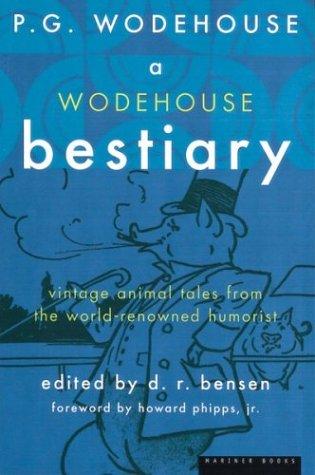
Wodehouse's love for animals had a strong impact on his work and some of his most famous animal stories are collected in a A Wodehouse Bestiary
I re-read the book in honor of his birthday and it is as funny as I remembered. Perhaps every story included is not his absolute best, but my two favorite Jeeves and Bertie stories are included Jeeves and The Impending Doom and Jeeves and the Old School Chum. All in all we give the book a four paws up rating, or 31 paws up rating if we count every paw in the house (remember Ernie the cat has only 3 legs).
If you don't feel up to reading there is also a hilarious Jeeves and Wooster TV show available from Netflix. While neither Jeeves and The Impending Doom or Jeeves and The Old School Chum make the episode list there are many funny episodes and lots of them involve dogs. My favorite is Jeeves The Matchmaker which features an adorable Irish Wolfhound named Patrick. Here is a clip below, watch for a while and you get to see Patrick ruin Bertie's ill advised marriage proposal.
Dr. Zira and Ping enjoyed posing with the book and one of my tea pots: Tea for Two! (Two bad we had to our urban deck as our background and not an English manor house).
Saturday, October 1, 2011
Book Review-The Curious Incident of the Dog in the Nightime by Mark Hadden
Its raining here, again! We were supposed to go on a hike by the beach but that is not going to work. So since a rainy day is a good ay to read a book, here is another review. Courtesy of Bob.


Above a dog in the nap time (or more specifically Baby Bob at nap time, pictures taken four years ago). A good segue way to our latest review, The Curious Incident of the Dog in the Night Time, by Mark Haddon.
Like our last review this is not a traditional "dog" book. In fact dogs play a pretty small character role, despite appearing in the title, but they do sort of permeate the spirit of the whole book. The story is about a 15 year old, an extremely intelligent boy, named Christopher John Francis Boone who loves math and has some issues that seem to fall within the realm of Asberger's syndrome, though that is never specifically stated in the book. The title of the book comes from a quote in the Sherlock Holmes Story, Silver Blaze. Christopher dislikes most fiction but enjoys Sherlock Holmes stories because he admires the characters logical approach to crime solving.
Christopher also likes dogs because he finds them less confusing then people who don't always say what they mean. One day Christopher discovers the murdered body of his neighbors dog and he decides that like Holmes he will investigate the dogs death, which he considers a murder on par with the murder of a person. (I have to say I would agree).
Most of the book focuses on how Christopher views the world and how he struggles within the confines of his disability to try new things and solve the mystery. Haddon does a very good job of getting the reader inside Christopher's head and the book is an excellent example of character development. Though the book has some sad parts, it has a great uplifting ending that dog lovers will definitely appreciate.
The book won the Boeke Prize and the 2003 Whitebread Book of The Year award. In some circles it has been touted as an excellent portrayal of autism which annoys Haddon who says he never set out to write a book about autism. Others have criticized the book as being an inaccurate portrayal of Autism and Aspberger's. The whole debate seems fairly silly to me and I sympathize with the author as firstly, Autism is never mentioned in the book, secondly it is a work of fiction and not some medical text book, and thirdly last time I checked people with Autism and Aspberger's syndrome are as unique as anyone else so I am not sure what an "accurate" character portrayal would consist of. Overall, I really like the book and would eagerly recommend it. Bob found it mildly interesting and said he preferred napping to listening to the story. We compromised on a 3 and a half paw rating.
This is a blog hop-check out the other entries
Above a dog in the nap time (or more specifically Baby Bob at nap time, pictures taken four years ago). A good segue way to our latest review, The Curious Incident of the Dog in the Night Time, by Mark Haddon.
Like our last review this is not a traditional "dog" book. In fact dogs play a pretty small character role, despite appearing in the title, but they do sort of permeate the spirit of the whole book. The story is about a 15 year old, an extremely intelligent boy, named Christopher John Francis Boone who loves math and has some issues that seem to fall within the realm of Asberger's syndrome, though that is never specifically stated in the book. The title of the book comes from a quote in the Sherlock Holmes Story, Silver Blaze. Christopher dislikes most fiction but enjoys Sherlock Holmes stories because he admires the characters logical approach to crime solving.
Christopher also likes dogs because he finds them less confusing then people who don't always say what they mean. One day Christopher discovers the murdered body of his neighbors dog and he decides that like Holmes he will investigate the dogs death, which he considers a murder on par with the murder of a person. (I have to say I would agree).
Most of the book focuses on how Christopher views the world and how he struggles within the confines of his disability to try new things and solve the mystery. Haddon does a very good job of getting the reader inside Christopher's head and the book is an excellent example of character development. Though the book has some sad parts, it has a great uplifting ending that dog lovers will definitely appreciate.
The book won the Boeke Prize and the 2003 Whitebread Book of The Year award. In some circles it has been touted as an excellent portrayal of autism which annoys Haddon who says he never set out to write a book about autism. Others have criticized the book as being an inaccurate portrayal of Autism and Aspberger's. The whole debate seems fairly silly to me and I sympathize with the author as firstly, Autism is never mentioned in the book, secondly it is a work of fiction and not some medical text book, and thirdly last time I checked people with Autism and Aspberger's syndrome are as unique as anyone else so I am not sure what an "accurate" character portrayal would consist of. Overall, I really like the book and would eagerly recommend it. Bob found it mildly interesting and said he preferred napping to listening to the story. We compromised on a 3 and a half paw rating.
This is a blog hop-check out the other entries
Sunday, August 21, 2011
Dog Years by Mark Doty-A Book Review Hosted By Tubby-And Blog Hop
This is kind of a cheater book review because I have read this book several times, and even mentioned it on this blog before in this post. However, I love the book, recently re-read it, and after coughing up 600$ big ones to have Dr. Zira's teeth cleaned (right after paying multiple thousands of dollars for Norbert's bloat surgery) I thought it would be a good idea to use a book I already owned. The book in question is Dog Years by Mark Doty.
Mark Doty is an accomplished poet, memoirist, and of course dog lover. The book deals with aging, mortality, and loss, but it isn't depressing or maudlin. What happens is that Doty and his partner are living happily with their black lab mix Arden when Doty's partner contracts AIDS. Doty has written another memoir dealing with his partner's death so it isn't the focus of the book, but no one writes about loss better and the images of the partner watching The Incredible Journey as the disease reduces him to an ever more child-like state are heartbreaking. In order to bolster his own, and his partner's spirits, Doty adopts a golden retriever, Beau, during the final days of the illness. After Doty's partner passes the dogs provide the sort of solid and non-judgemental support he needs.
The rest of the book moves somewhat back and forth in time dealing with Doty's life with the dogs and his new partner and their travels and accounts of dogs he loved and lost as a child. Of course the dogs age, as is inevitable, and around the time of September 11 2001 Beau develops kidney failure and later a neurological disorder and passes away. The loss of the dog is placed against the destruction of the city and Doty writes about it very effectively.
Over the next several years Arden, the other dog, gets older and Doty grows even closer to him. At one point Doty writes a really sweet list of the things Arden enjoys in his advancing years. At the age of 16 Arden passes and Doty writes one of my favorite lines in the book: " A long life, we say, a fine life, and not nearly long enough." Anyone who has loved an older dog can't help but understand that line. Out of four paws we would give this is a four paw review-read it!
Oh and its Saturday Pet Blogger Blog Hop Weekend (though I am linking up on Sunday)
The rest of the book moves somewhat back and forth in time dealing with Doty's life with the dogs and his new partner and their travels and accounts of dogs he loved and lost as a child. Of course the dogs age, as is inevitable, and around the time of September 11 2001 Beau develops kidney failure and later a neurological disorder and passes away. The loss of the dog is placed against the destruction of the city and Doty writes about it very effectively.
Over the next several years Arden, the other dog, gets older and Doty grows even closer to him. At one point Doty writes a really sweet list of the things Arden enjoys in his advancing years. At the age of 16 Arden passes and Doty writes one of my favorite lines in the book: " A long life, we say, a fine life, and not nearly long enough." Anyone who has loved an older dog can't help but understand that line. Out of four paws we would give this is a four paw review-read it!
Oh and its Saturday Pet Blogger Blog Hop Weekend (though I am linking up on Sunday)
Thursday, August 11, 2011
Bibliophile Bob-A Hounds Book Review Post
The hounds are excited to introduce a new feature to our blog, book reviews. Our mom loves to read, so book reviews are a natural choice. We've decided to include non-fiction and fiction choices, so long as animals are featured in the book. Our first book choice is Dog Sense by English animal behaviorist, John Bradshaw. Below is Bob checking out his work:
Mom took the book out of the library (got to support those libraries since our grand dad was the director of the Saratoga Springs Public Library until he retired). Overall mom is glad she didn't buy the book because a lot of the information in it was things she already new from other books she has read and from John Bradshaw's interview in bark magazine. Still mom liked the book and would give it a 3 and a half paw rating, out of four.
Things I (mom) liked about the book:
1.) Bradshaw points out that wolves and dog's are very different. I have never liked the dog is a wolf theory, and pretty much all modern research into dog behavior discounts it. Bradshaw points out that though dog's DNA is similar to wolves, they are still drastically different. First, he provides evidence that supports that DNA does not regulate behavior. Then he argues that dogs have been in existence for approximately 15,000 years, so they have had all that time to become very different from wolves. Finally, he points out that our original assumptions of wolf behavior are very faulty because they are based on observations of wolves in zoos and those wolves are in an abnormal environment and thus don't behave like typical wolves in the wild. Rather then looking to wolves for clues about dog behavior, Bradshaw suggests we look to the behavior of feral village dogs in India. These dogs live much like dogs might have lived in early human times. They exist in a loose pack structure, but there is no definite "alpha" dog and they don't hunt together.
2.) Since he discounts the wolf theory he is very anti the dominance/alpha theory of dog behavior. I love this because I am not a fan of dominance/alpha theory at all, lots of abuse has been dumped on dogs for many years due to the "alpha" theory. In Bradshaw's opinion dogs are not constantly trying to dominate humans, or each other, and if we act like they are they fail to really understand and bond with our dogs.
3.) He is against physical punishment. At our house we definitely prefer the carrot to the stick approach, in my opinion positive reinforcement is how dogs, people, cats, everyone learns. Bradshaw recommends positive reinforcement and also withdraw of attention as an aversive for a dog who misbehaves. So if a dog is jumping up on you and you don't like it, turn away from the dog and ignore them rather then physically punish the dog. Then when the dog is behaving again (four fleet on the floor) lavish them with the attention they crave.
4.) He wants people to lighten up their expectations on dogs. Bradshaw points out that we humans expect a LOT of our dogs. We want them to behave in public at all times, to be quiet, to wait for us patiently while we are gone, to repress frustration and anxiety, etc. Bradshaw has particularly good advice about how to train a dog to adjust to being left alone that might help dogs with separation anxiety.
5.) He's English-What can I say, I am an unrepentant anglophile so anyone from that country automatically gets points.
What I didn't like:
1.) Much of what has been said in the book has been said before and though Bradshaw does add some new things to the conversation, a lot of it felt like a rehashing of other books I've read.
Here is a link to a you tube video of Bradshaw discussing dog behavior
Mom took the book out of the library (got to support those libraries since our grand dad was the director of the Saratoga Springs Public Library until he retired). Overall mom is glad she didn't buy the book because a lot of the information in it was things she already new from other books she has read and from John Bradshaw's interview in bark magazine. Still mom liked the book and would give it a 3 and a half paw rating, out of four.
Things I (mom) liked about the book:
1.) Bradshaw points out that wolves and dog's are very different. I have never liked the dog is a wolf theory, and pretty much all modern research into dog behavior discounts it. Bradshaw points out that though dog's DNA is similar to wolves, they are still drastically different. First, he provides evidence that supports that DNA does not regulate behavior. Then he argues that dogs have been in existence for approximately 15,000 years, so they have had all that time to become very different from wolves. Finally, he points out that our original assumptions of wolf behavior are very faulty because they are based on observations of wolves in zoos and those wolves are in an abnormal environment and thus don't behave like typical wolves in the wild. Rather then looking to wolves for clues about dog behavior, Bradshaw suggests we look to the behavior of feral village dogs in India. These dogs live much like dogs might have lived in early human times. They exist in a loose pack structure, but there is no definite "alpha" dog and they don't hunt together.
2.) Since he discounts the wolf theory he is very anti the dominance/alpha theory of dog behavior. I love this because I am not a fan of dominance/alpha theory at all, lots of abuse has been dumped on dogs for many years due to the "alpha" theory. In Bradshaw's opinion dogs are not constantly trying to dominate humans, or each other, and if we act like they are they fail to really understand and bond with our dogs.
4.) He wants people to lighten up their expectations on dogs. Bradshaw points out that we humans expect a LOT of our dogs. We want them to behave in public at all times, to be quiet, to wait for us patiently while we are gone, to repress frustration and anxiety, etc. Bradshaw has particularly good advice about how to train a dog to adjust to being left alone that might help dogs with separation anxiety.
5.) He's English-What can I say, I am an unrepentant anglophile so anyone from that country automatically gets points.
What I didn't like:
1.) Much of what has been said in the book has been said before and though Bradshaw does add some new things to the conversation, a lot of it felt like a rehashing of other books I've read.
Here is a link to a you tube video of Bradshaw discussing dog behavior
Wednesday, June 1, 2011
In Memory of Bingo-Old DogsAre The Best Dog

Right around this time three years ago Bingo game into our lives. We fostered him for a local pug rescue group and then adopted him when it became clear he was not a candidate for permanent adoption. Bingo had cancer (a slow growing kind), partial paralysis of his back legs, and he was incontinent. Even so he lived 2 and a half good years with us, passing away (with our vets help) in November of 2010 when he went into liver failure. The most defining characteristic of Bingo was his sweetness, he was an all around sweet boy, but with a side of grumpy old man ( he barked loudly for his breakfast and dinner whenever he felt it was taking too long, it always reminded me of an old man yelling at a waitress in a restaurant). Loyal and loving to the end, even when he could barely walk he would scoot his way to the door to greet us when we got home from work. Bingo really embodied the message of the above book, Old Dogs Are Best Dogs (which is an absolutely wonderful book that every dog lover should read.) I got it for Christmas two years ago, here is a picture of Bingo, Tubby, and Ping enjoying story time:
Personally I believe all dogs are the best dogs (young and old) but there is no reason an older dog cant make a fabulous companion. There is also no excuse for tossing aside a friend of 12 years, as Bingo's previously family did, when his health worsened and his care became more difficult to manage. I am not someone who believes that everyone needs to rescue their dog, there is nothing wrong with reputable breeders, and I have decided my next dog will be a puppy from a good breeder BUT I do think every dog lover should think about welcoming a senior into their home (at least once or twice), you save a dog and you enrich your own life in return.
Bingo's story is a very happy one. I miss him, but I am not sad that he passed away because he got two quality years in a loving home. Years he most definitely would not have had if the rescue group had not taken him in (he was in a high kill city shelter). The below pictures show what a wonderful time Bingo had in his retirement home (and what a wonderful time we had with him).
Subscribe to:
Posts (Atom)


.